

Positive Coping Strategies
Managing Emotions
Emotions are not consciously controlled. They happen as a reaction to something and are often strongly linked to our memory and previous experiences. Our emotional part of the brain is primitive (which is why it is sometimes referred to as our inner chimp) and can prompt quick and strong reactions - you may want to cry, run away or shout for example.
Strong emotional responses are normal and it is important to recognise that it is also healthy to express our emotions. As we become older, we need to learn to manage our emotions, which simply means choosing when and how we express them. If you think this might be something you are struggling with, try these 5 steps. If you feel you need more support, speak to a parent or see your tutor, head of year, school nurse, school counsellor or email askaway@guildfordhigh.co.uk

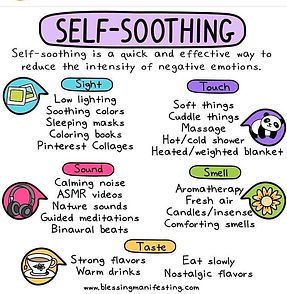
Self-soothing is also a great technique to help calm the mind when you are feeling overwhelmed with emotion. It uses all the senses to anchor the mind to the present. Why not create your own list? Here are some ideas ...
I'm a paragraph. Click here to add your own text and edit me. It's easy.
Managing Stress and Anxiety
Stress is one of many emotions we will feel in day to day living and low levels of stress can, in fact, increase our performance in some situations; the issue is when those feelings become out of control and begin to overwhelm you. Stress is a feeling of being under pressure, which may come from a variety of sources - something external that you are experiencing at school or home, work, an argument you have had with someone, can all induce a feeling of stress. It is important to consider that stress is subjective - the same situation will create a variety of emotional responses for different people, so don't compare but always find a trusted person to talk to about how you are feeling; this is an important first step towards being able to manage, understand and control your stress.
Anxiety is a similar feeling to stress but tends to last longer, not going away after a stressful situation has passed. Whilst feeling anxious is also a natural and normal emotion to have, it is important to recognise the signs and symptoms of when it is becoming problematic and further support is required. If you are ever uncertain, always ask advice from a trusted adult. Long term anxiety will begin to manifest itself physically in any one - or all - of the following ways and for an extended period of time (several days).
Kids helpline is the Australian version of childline - so don't try phoning them! However, it has excellent advice and resources on their website on how to manage stress and anxiety. The videos may not work but the information written is clear and concise and may help you towards understanding and managing the stress and anxiety that you may be feeling.


If you feel you need more support, speak to a parent or see your tutor, head of year, school nurse, school counsellor or email askaway@guildfordhigh.co.uk
The following links are NHS resources that are audio guides to mental wellbeing on a range of topics.
Apps to help:
